Sunday, June 20, 2010
Amber Waves of Grain
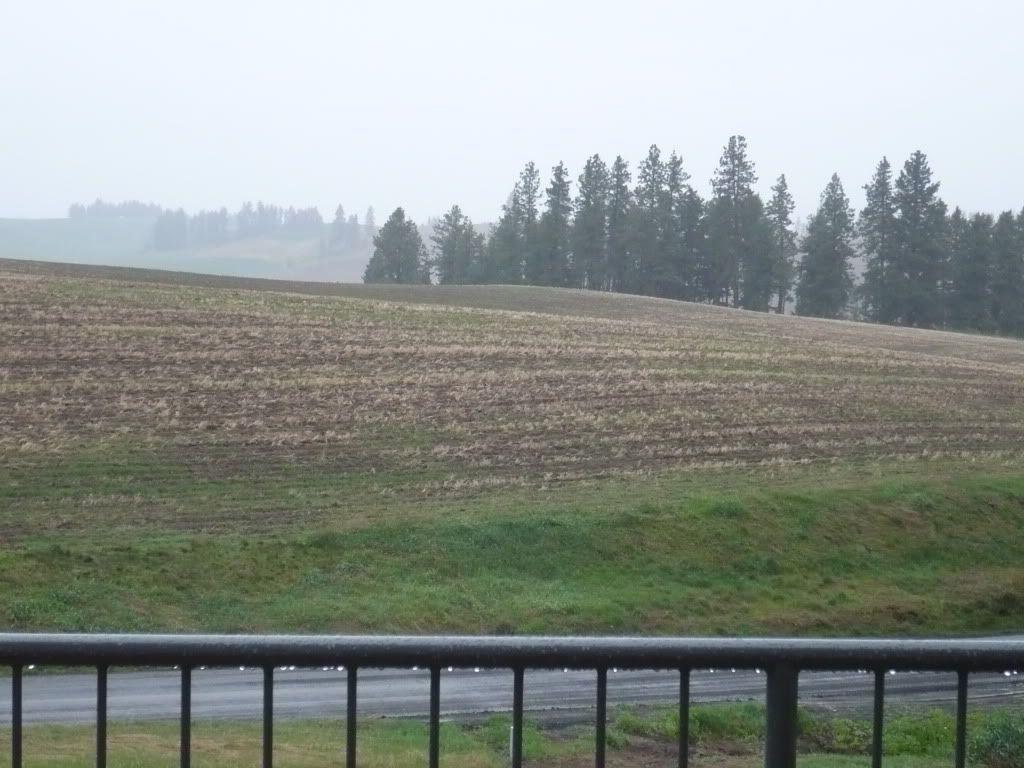
This is why I love living here (even if it is raining AGAIN). Isn't it beautiful?
And yes, I know that it's not amber. It's not actually grain, either -- just grass. But the grain around here is still too short to wave so dramatically. And it won't be amber until fall. Don't harsh my buzz.

Friday, June 18, 2010
Minor Setback
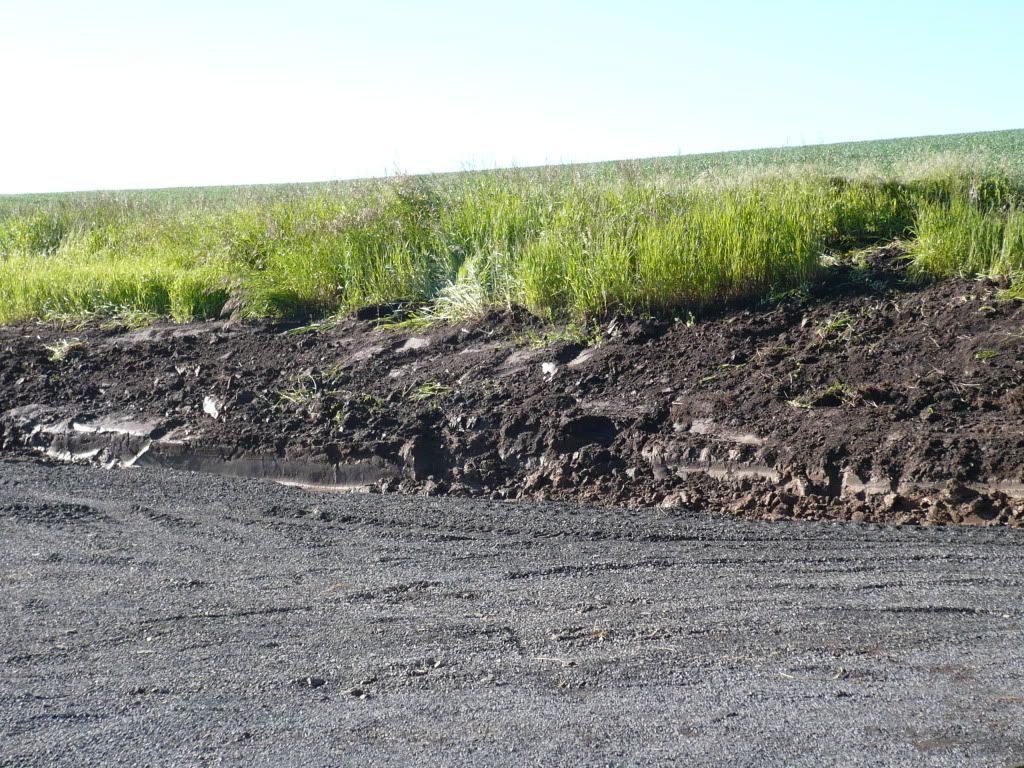
We dug out the garden with a backhoe.
We've known since winter that we had some drainage issues (see: Sea of Mud) that sooner or later we would have to deal with, and we also had some giant piles of beautiful topsoil that we wanted to spread around. One of the piles was where we put the garden -- we thought that we would wait until next year to do the excavating.
But the drainage issues turned out to be a bigger deal than we thought they would. Add to that the limited time we've had for upkeep, the smothering of our property with weeds, and the cherry on top -- the terrible weather we've had. Seriously, it's been Biblical. We had to fire up the woodstove two nights ago. It's the MIDDLE OF JUNE!
So, reluctantly, we called the excavator. We could have had them move everything but the pile the garden was in, but that would have meant calling them back next year, which would mean extra money, which would have made A very sad.
So we had a pea shoot, tiny green onion and broccoli-green stir fry (it was actually very good), and several salads of spinach, beet greens and teeny tiny lettuce. We had the excavator make us an actual garden location, so we'll put the peppers and eggplants and peanuts there (they are all STILL languishing on the ledge), get some tomato starts from the farmers market, maybe toss in some beans and zucchini, and accept that we really are the idiots that we thought we were when we started.
It's not a total loss -- we still have strawberries (although we won't if I don't get some bird netting on them), parsley, rhubarb, fruit trees (those sticks are looking positively lush) and chickens who might start laying any day now. We are learning many many things about soil management, weed control, topography and drainage, albeit the hard way. Today is a gorgeous day; the sun is shining, the birds are singing and a breeze (not gale-force winds) is blowing. We abide.
Tuesday, May 25, 2010
Can't you just TASTE it?
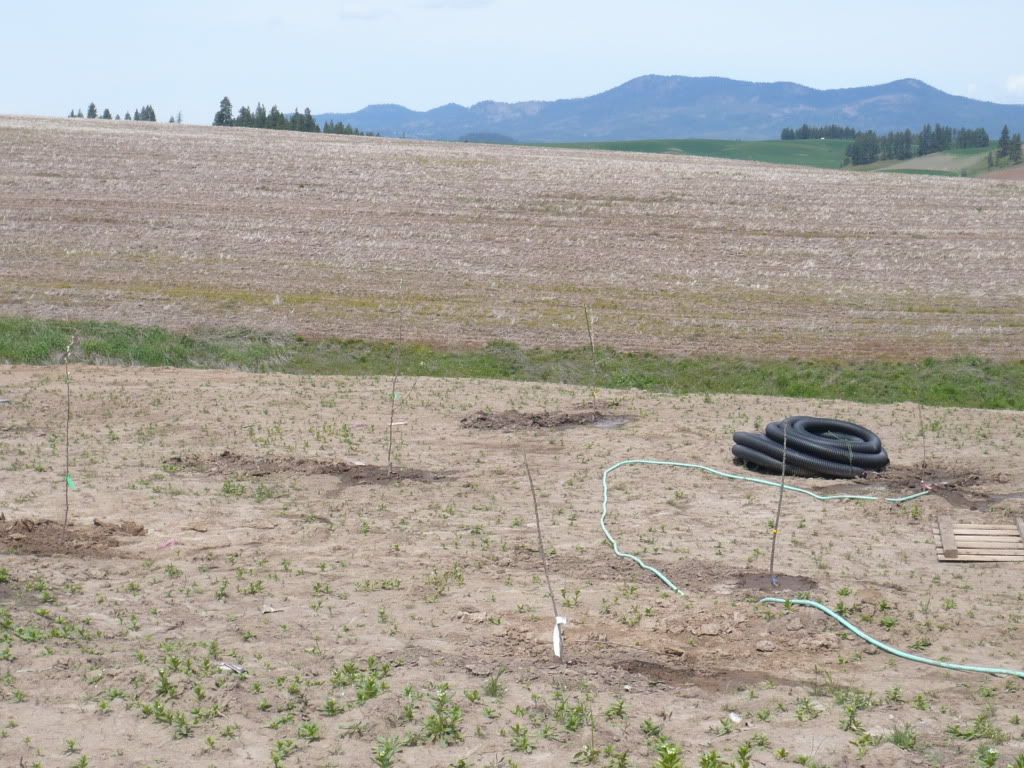
Two plums, two apples, two cherries. Probably no fruit for 3-4 years, presuming the deer that I suddenly see everywhere don't strip off the leaves and kill them.
It's been a bad couple of weeks on the farm. I set out the cabbage and lettuce on May 11 -- the lettuce died; the cabbage is sort of lingering on but it doesn't look good.
We set out the tomatoes (the ones I didn't accidentally snap off getting out of the pots) on May 17. It got down to 37 degrees on May 20, and 34 on the 21. Even the finest milk jug cloches can't protect tomatoes against that. The tomatoes are probably all dead, all 40 of them.
This is definitely as bad as we've done gardening in years. There's still a lot coming up: peas, spinach, beets, radishes. The strawberries are fine, the rhubarb is alive, and perhaps as many as 3 parsleys made it. The peppers and eggplants and still thriving on the ledge, waiting for better days. But all the failure has been pretty depressing. I can't help but think how screwed we'd be if we actually were relying on this to feed our family.
Still. The trees are alive; the chickens are thriving. We should be harvesting strawberries and radishes soon. We learn from our abject failure. Next year we'll do better.
Monday, May 24, 2010
Life gets in the way...
Sorry for the lack of updates -- it turns out having a baby and a couple jobs and a brand-new house and four chickens and plants is really hard. We're in kind of a busy patch in real life for the moment, and Baby seems to be so highly evolved she doesn't need to sleep, so opportunities to update are few and far between lately. Hopefully in a week or so (presuming Baby ever goes to bed for more than 20 minutes at a time) things will be calmer. I know what the weed is (hint: it's one of these) and I have a picture of the "orchard"!
Saturday, May 15, 2010
Neighbors
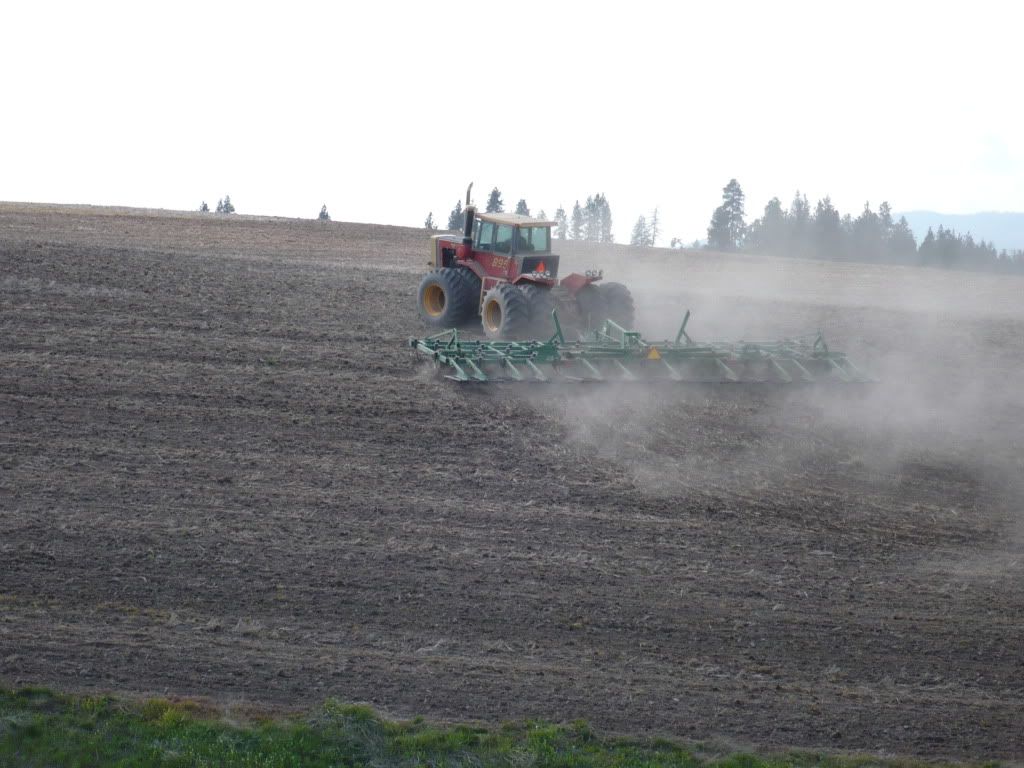
We live kind of out in BFE, but that doesn't mean we don't have neighbors. A's family goes back on this land for generations, but we're the only ones who actually live out here now. There's about 700 acres around us that belong to his family but are rented to another farmer, and several hundred more acres to our south that belong to another family -- but we only see those folks a few times a year when they're actually working the land, like yesterday when I took this picture across the road.
It's sort of surreal to me to actually see people farming, especially this sort of large-scale monoculture. For the last few weeks enormous farm machinery has been driving past our house. I mean really massive, as big as a house. Although "farming methods, machinery, etc. used in the Idaho Palouse" is yet another thing to add to the list of stuff I need to learn about, even knowing nothing it's fascinating to see the different fields around here greening up at different rates. There are some with wheat already ankle high, looking like incredibly lush grass. And others, like across the road, just plowing/harrowing now.
Wednesday, May 12, 2010
Sea of Mud II: The Weedening
Have you seen this weed?

Because we sure as heck have; it's every-freaking-where. As the sea of mud begins to dry, these things are popping up anywhere there's bare dirt. It vastly, vastly outnumbers any other weed out there.
And there's another thing we're idiots about -- weeds. I know dandelions, tansy ragwort, crabgrass and pigweed by name. There are a few others I know by sight: the groundcovery one with the purple flowers and pods that shoot seeds; the feathery one that looks sort of like carrots; the various ones that look sort of like dandelions but aren't. And the thing is, the common weeds are so common, you hate to even ask anyone about them -- you sound like a moron. But you have to know your weeds in order to fight them, especially if you're anti-Roundup. For the moment we're pulling up as many as we can, and trying to figure out some kind of cheap cover crop we can plant that might smother them out.
So, if anybody knows what this thing is and maybe a magical trick to kill it without poison or, you know, effort, please let me know.
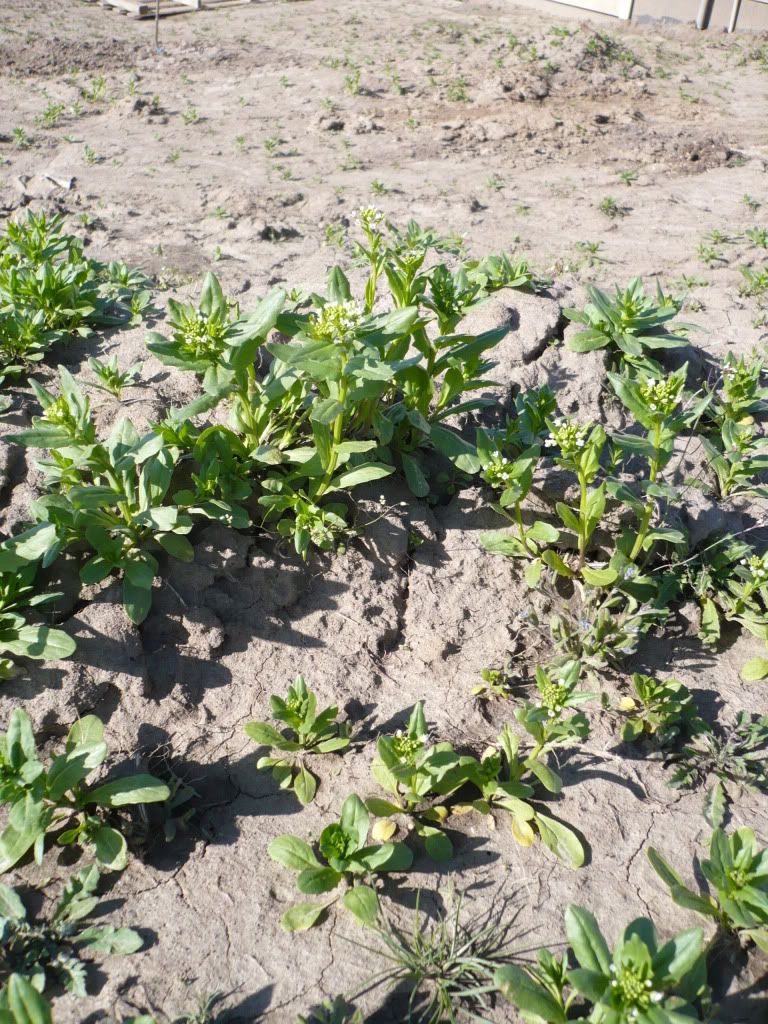
Because we sure as heck have; it's every-freaking-where. As the sea of mud begins to dry, these things are popping up anywhere there's bare dirt. It vastly, vastly outnumbers any other weed out there.
And there's another thing we're idiots about -- weeds. I know dandelions, tansy ragwort, crabgrass and pigweed by name. There are a few others I know by sight: the groundcovery one with the purple flowers and pods that shoot seeds; the feathery one that looks sort of like carrots; the various ones that look sort of like dandelions but aren't. And the thing is, the common weeds are so common, you hate to even ask anyone about them -- you sound like a moron. But you have to know your weeds in order to fight them, especially if you're anti-Roundup. For the moment we're pulling up as many as we can, and trying to figure out some kind of cheap cover crop we can plant that might smother them out.
So, if anybody knows what this thing is and maybe a magical trick to kill it without poison or, you know, effort, please let me know.
Monday, May 10, 2010
Who knew weather was such a big freakin' deal?
I used to think talking about the weather was the last resort of people who couldn't think of anything else to talk about. That was before I decided to be a farmer.
You know, in spite of everything, I like to think we didn't just move out here with absolutely no idea what we were doing. I took an 8-week class on small acreage farming, we've read tons of books, we've done a reasonable amount of backyard vegetable gardening, we've talked to growers at the farmers market. But I've been finding that the resources I've found speak most to our experience this spring are some books I read when I was about 10: the Little House on the Prairie books. Specifically, their focus on, and evocative descriptions of, the vagaries of weather.

Dust Storm, May 3.

Snow, May 6.
Not pictured: 80 (!) mph wind gusts, hail, rain of frogs.
What I mean to say is, weather. It's crazy! And has kept us cooped up inside since about April 28. As best we can tell, most of our crops are okay -- I tried to hat some parsley starts in the middle of a downpour and they mostly blew away, so we lost 6 or 7 of eight parsley plants. And we haven't planted a thing since April 26. The weather report for the next 10 days looks good though, so -- just like Pa Ingalls -- we're going to make hay while the sun shines.
You know, in spite of everything, I like to think we didn't just move out here with absolutely no idea what we were doing. I took an 8-week class on small acreage farming, we've read tons of books, we've done a reasonable amount of backyard vegetable gardening, we've talked to growers at the farmers market. But I've been finding that the resources I've found speak most to our experience this spring are some books I read when I was about 10: the Little House on the Prairie books. Specifically, their focus on, and evocative descriptions of, the vagaries of weather.
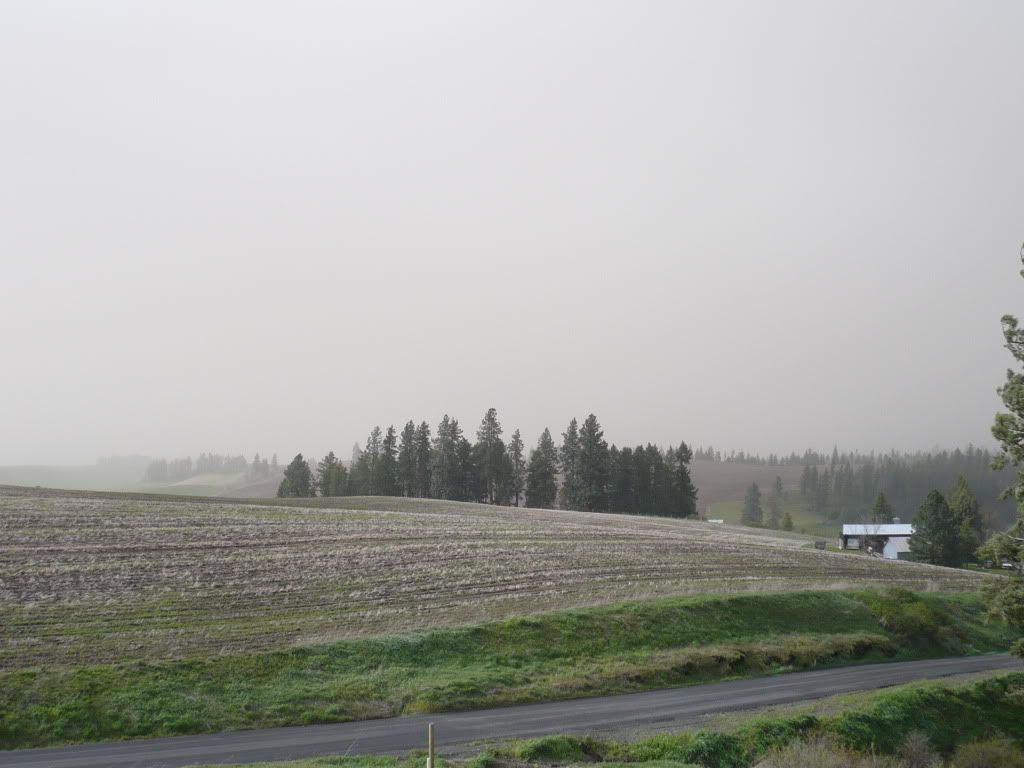

Not pictured: 80 (!) mph wind gusts, hail, rain of frogs.
What I mean to say is, weather. It's crazy! And has kept us cooped up inside since about April 28. As best we can tell, most of our crops are okay -- I tried to hat some parsley starts in the middle of a downpour and they mostly blew away, so we lost 6 or 7 of eight parsley plants. And we haven't planted a thing since April 26. The weather report for the next 10 days looks good though, so -- just like Pa Ingalls -- we're going to make hay while the sun shines.
Sunday, May 2, 2010
Oh the weather outside is frightful...
The weather has just been nasty all week long, so we really haven't been doing much of anything. For the most part our plants outside seem to be taking it in stride -- but the onions, I'm sad to say, did not make it through the cold and wind. A moment of silence for the onions.
The chickens, however, seem to be doing just fine.

They grow up so fast: Stringer, Marlow, Avon and Prop Joe (I think; they get harder to tell apart as they get more chickeny)
I was pretty worried about them the first few nights -- it was getting down into the low 40s and it seemed like the light really wasn't warming the place up much. But they seem unfazed; they just keep eating and crapping the same as ever. It'll still be several (possibly as many as 15-20) weeks before we see any eggs, so for now all we get is compost out of them. I've been in there a couple of times to add to their litter; they absolutely freak out if you toss it near them -- they can fly pretty high, maybe 4 feet. Hopefully as they get bigger and heavier they won't be quite so airborne.
We have cherry trees we really need to plant, but it's not possible to even get near where the fruit orchard is supposed to be through all the mud (at the moment there are two sticks that someday might be plum trees there, so it's a little presumptuous to call it an orchard). We also have lettuce and cabbage starts that really need to go out, and a ton of seeds that need planting. Hopefully it will stop raining and hailing and blowing 40 mph winds before, say, June.
The chickens, however, seem to be doing just fine.
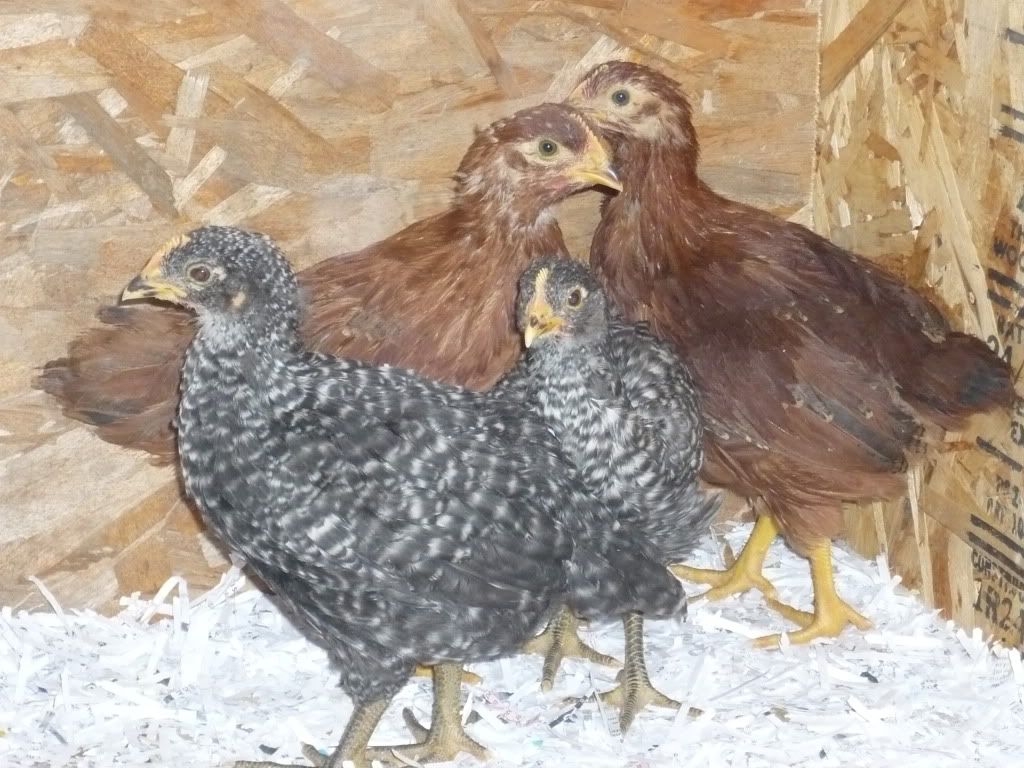
I was pretty worried about them the first few nights -- it was getting down into the low 40s and it seemed like the light really wasn't warming the place up much. But they seem unfazed; they just keep eating and crapping the same as ever. It'll still be several (possibly as many as 15-20) weeks before we see any eggs, so for now all we get is compost out of them. I've been in there a couple of times to add to their litter; they absolutely freak out if you toss it near them -- they can fly pretty high, maybe 4 feet. Hopefully as they get bigger and heavier they won't be quite so airborne.
We have cherry trees we really need to plant, but it's not possible to even get near where the fruit orchard is supposed to be through all the mud (at the moment there are two sticks that someday might be plum trees there, so it's a little presumptuous to call it an orchard). We also have lettuce and cabbage starts that really need to go out, and a ton of seeds that need planting. Hopefully it will stop raining and hailing and blowing 40 mph winds before, say, June.
Friday, April 30, 2010
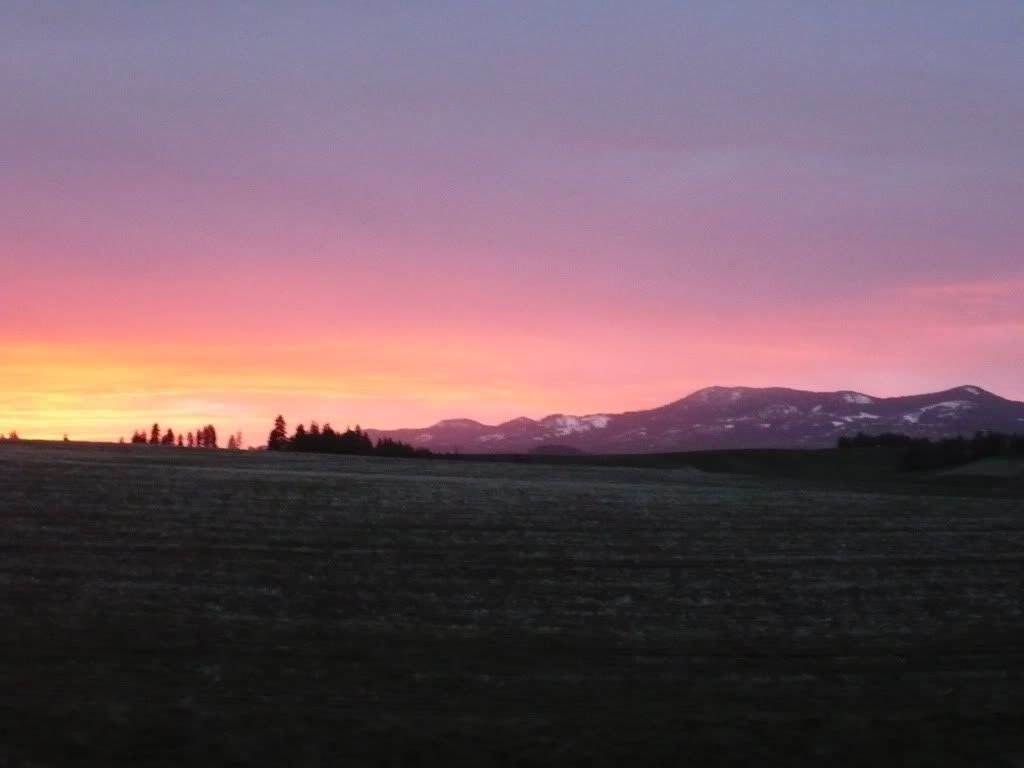
Well, it's been rainy and windy for three, four days now -- not much to report. The chickens are settling into the coop fairly nicely and as far as I know our plants in the garden are doing okay -- it's been too muddy to look at them much. I am pleased to report that my cloches are all still where I left them. Our up-potted starts are happy. We won't be able to plant anything new until the ground dries up a little, so we're in a bit of a holding pattern for now. Might as well enjoy the sunset.
Monday, April 26, 2010
Good, cheap or easy -- you can have cheap.
I know that's not the exact quote, but close enough.
We are not shoppers. A has genetic, shading into pathological, cheapness (and a scarily complex understanding of the relative value of everything), whereas I'm more too lazy and have finally developed the realization that NOTHING is as exciting or interesting in your house as it is in the store. I also really enjoy creating makeshift solutions to problems using found materials and trash. Thus, our cloches:

I know making cloches (or hats as we call them here; "hats for plants -- keep plants warm") out of milk jugs is not revolutionary. And I guess in the rest of the world just sort of pushing them into the dirt is sufficient to anchor them down. But we have blowing-over-chicken-coop winds around here.
In our past gardens we had a more-or-less endless supply of bamboo poles about 1/2 an inch thick and four feet long. Those things were dead useful and I wish we still had them. To anchor cloches with them, you just cut a segment about a foot and a half long, pushed it into the ground next to your plant, and threaded the milk jug over it (without the cap). This worked perfectly, and if you have a supply of something similar, I highly recommend it.
Without bamboo stakes or anything similar to hand, I came up with the above solution which, while not nearly as elegant, cost a total of $.99 -- the cost of 208 feet of twine. Two foot-and-a-half lengths of twine are tied together at the ends in such a way to make two long ends with a loop in the middle that tightens when you pull the ends. This goes around the spout of the milk jug. The two long ends are held down with the scrap ends of two-by-fours, which we have an abundant supply of.
By the way, there's broccoli under there. We also set out 60 Spanish onions (the sad fellows from previous posts -- wish them luck) and eight Italian parsley plants, planted two plum trees, one rhubarb plant, some thyme, tarragon and a bunch of peas, and up-potted all the tomatoes, eggplants and peppers this weekend. There's a ton more we were hoping to do -- set out lettuce and cabbage starts, plant more potatoes, beets and spinach, plant some carrot seeds, and other stuff I'm not remembering. There is really a lot to do.
We are not shoppers. A has genetic, shading into pathological, cheapness (and a scarily complex understanding of the relative value of everything), whereas I'm more too lazy and have finally developed the realization that NOTHING is as exciting or interesting in your house as it is in the store. I also really enjoy creating makeshift solutions to problems using found materials and trash. Thus, our cloches:
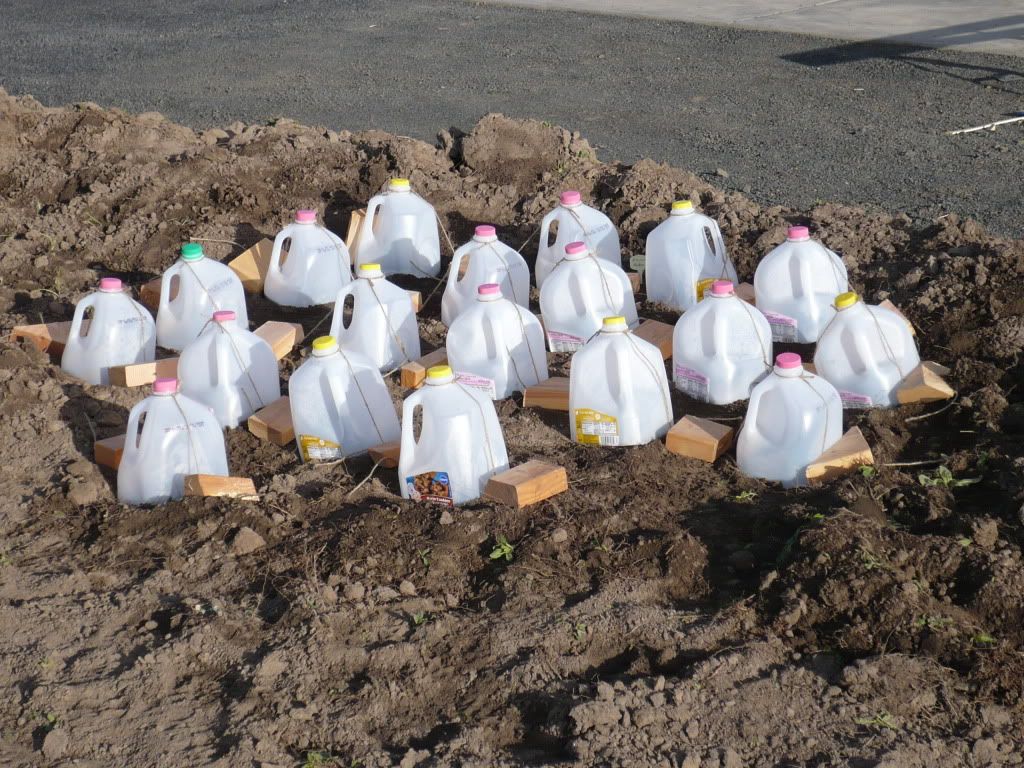
I know making cloches (or hats as we call them here; "hats for plants -- keep plants warm") out of milk jugs is not revolutionary. And I guess in the rest of the world just sort of pushing them into the dirt is sufficient to anchor them down. But we have blowing-over-chicken-coop winds around here.
In our past gardens we had a more-or-less endless supply of bamboo poles about 1/2 an inch thick and four feet long. Those things were dead useful and I wish we still had them. To anchor cloches with them, you just cut a segment about a foot and a half long, pushed it into the ground next to your plant, and threaded the milk jug over it (without the cap). This worked perfectly, and if you have a supply of something similar, I highly recommend it.
Without bamboo stakes or anything similar to hand, I came up with the above solution which, while not nearly as elegant, cost a total of $.99 -- the cost of 208 feet of twine. Two foot-and-a-half lengths of twine are tied together at the ends in such a way to make two long ends with a loop in the middle that tightens when you pull the ends. This goes around the spout of the milk jug. The two long ends are held down with the scrap ends of two-by-fours, which we have an abundant supply of.
By the way, there's broccoli under there. We also set out 60 Spanish onions (the sad fellows from previous posts -- wish them luck) and eight Italian parsley plants, planted two plum trees, one rhubarb plant, some thyme, tarragon and a bunch of peas, and up-potted all the tomatoes, eggplants and peppers this weekend. There's a ton more we were hoping to do -- set out lettuce and cabbage starts, plant more potatoes, beets and spinach, plant some carrot seeds, and other stuff I'm not remembering. There is really a lot to do.
Friday, April 23, 2010
This blog post is boring.
As I said, we've also planted a lot of stuff outside. On April 11, we planted shelling peas (Maestro), snap peas (Super Sugar Snap), scallions, looseleaf lettuce (Italienescher), spinach (Whale), radishes (Cherry Belle), and sage. Lots of things are poking out of the ground, but so far they're not very interesting -- a couple of leaves. As best as I can tell, nothing is nibbling on them yet but I'm sure that's just a matter of time.
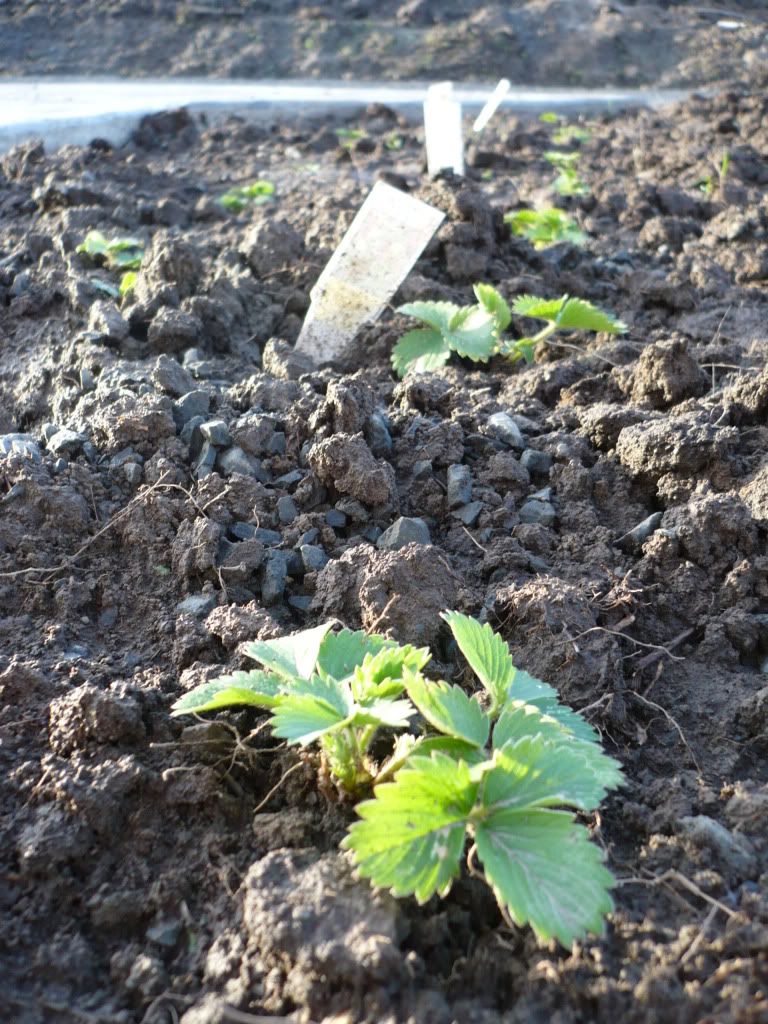
On April 18, we planted strawberries, Nevada looseleaf lettuce, potatoes (Russian Banana), and more peas, radishes, spinach and scallions.

Strawberries. We did not grow these from seed.
I'm pretty anxious to have something going on besides dirt and a few leaves here and there. I know this all takes time, it's only April, blah blah blah. But it's been winter for so long -- I'm ready to be moving on.
On April 18, we planted strawberries, Nevada looseleaf lettuce, potatoes (Russian Banana), and more peas, radishes, spinach and scallions.
I'm pretty anxious to have something going on besides dirt and a few leaves here and there. I know this all takes time, it's only April, blah blah blah. But it's been winter for so long -- I'm ready to be moving on.
Thursday, April 22, 2010
Rainy Day
Well, I was going to talk about the seeds we've started outside, but mud. So instead, I'll talk about nibbling away at the sea of mud, one tiny patch at a time.
I've basically picked an area that needs landscaping at random and begun a garden plan -- the front yard. It recommended itself to me because it's small and reasonably well defined by the house and driveway. Here's what I've got so far:

I an plainly not a professional landscaper. But I think it's pretty good. The "W"s are to indicate plants with winter interest, since we basically have winter for more than half the year. The circles around the herb garden are pavers.
Of course, it's all well and good to draw a picture. Now I just need about $1500 worth of plants.
Do you ever wonder how great-grandmas made their fantastic gardens? Everyone I know has at least one great-grandma who had just a fantastic garden, like an acre of dahlias and hollyhocks and lilac, and the best tomatoes and sweet corn on earth. But these women grew up in the Depression -- there's no way they spent thousands of dollars on seeds and plants. I imagine that they must have shared seeds and divisions with their neighbors. That seems like a completely different universe from what we live in now.
Wednesday, April 21, 2010
Vegetable Starts: Update
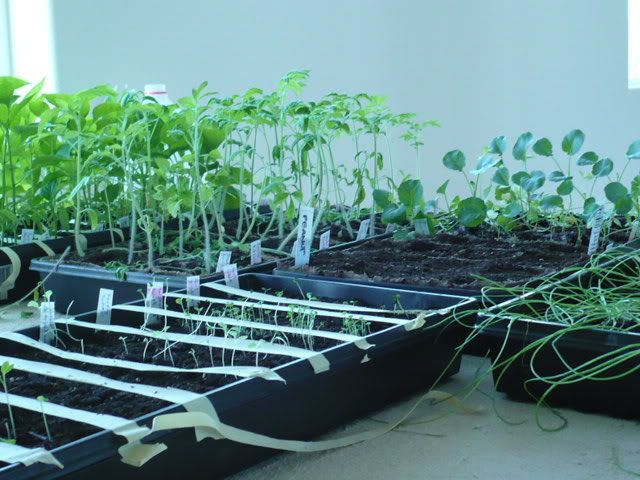
Meanwhile, the vegetable starts just keep growing (sort of):

Left: sad lettuce, unthinned oregano, eggplants, peppers
Center Front: Onions
Center Back: Tomatoes
Right Front: Basil, Savory, Marjoram, Lettuce, Cabbage
Right Back: Parsley, Broccoli, Peanuts

Another angle (re-arranged and pre-onion trimming)
The peppers and eggplants are still going gangbusters; they really need to be put into bigger pots. The tomatoes are also doing pretty well, although they're a little leggy for my comfort. Maybe we should have pinched them. Maybe we should pinch them now. Heck if I know. I've heard that you should put a fan on them to develop thick stems; sadly we have no spare fans. Maybe next year.
The rest of our seedlings are in slightly more disarray. It's hard to say how much stems from neglect and how much from ignorance, but hopefully now that our external affairs are in a little more order, we'll have more time to focus on them. I think partly they're out of sight, out of mind on the ledge, but I don't know what we can do about that. The onions in particular look pathetic; I think sets are in our future.
Several starts really need to go outside: the various lettuces, cabbage, possibly broccoli. Hopefully we'll get to that later this week.
We've planted quite a few things outside, too -- details tomorrow.

Center Front: Onions
Center Back: Tomatoes
Right Front: Basil, Savory, Marjoram, Lettuce, Cabbage
Right Back: Parsley, Broccoli, Peanuts
The peppers and eggplants are still going gangbusters; they really need to be put into bigger pots. The tomatoes are also doing pretty well, although they're a little leggy for my comfort. Maybe we should have pinched them. Maybe we should pinch them now. Heck if I know. I've heard that you should put a fan on them to develop thick stems; sadly we have no spare fans. Maybe next year.
The rest of our seedlings are in slightly more disarray. It's hard to say how much stems from neglect and how much from ignorance, but hopefully now that our external affairs are in a little more order, we'll have more time to focus on them. I think partly they're out of sight, out of mind on the ledge, but I don't know what we can do about that. The onions in particular look pathetic; I think sets are in our future.
Several starts really need to go outside: the various lettuces, cabbage, possibly broccoli. Hopefully we'll get to that later this week.
We've planted quite a few things outside, too -- details tomorrow.
Tuesday, April 20, 2010
Wildlife
So, when we were first scouting this site to build our house, A's dad mentioned in passing that he'd seen a moose about 2 miles down the road, near some trees and a permanent pond. 'Sure you did', I thought sagely to myself. Moose, while certainly present in the Palouse, are not so common that you just see them wandering around* -- and A's dad, while a fantastic person, is sometimes more of a storyteller than a scientist.
So, we're sitting on our deck enjoying the evening sun for the first time since we moved in, when who should come sauntering around the corner of our house?

Pictured: A nice lady moose. Like all wildlife photos, she was much closer before I ran to get the camera.
So, egg on my face, huh?
Wildlife has pretty sorely been lacking this winter, or at least right around our house. We've had mice in the woodpile (and -- sigh -- the garage), some Canada geese, some sparrows [? I'm terrible at identifying birds] that were building a nest in our gutter (I don't think it worked out), and various raptors including a bald eagle and some kind of giant hawk that was sitting in a tree not 5 feet from my car when I was driving to work one day. We saw deer almost every day when we were first building the house, but none for a while.
But the variety has really increased in the last couple weeks as the weather has gotten warmer. I hear tons of different bird songs (of course, I can barely tell a duck from a dodo, so I have to work on this). We've heard although not seen coyotes and owls, got a bit of an air show from some bats last night after the moose left, and some swallows [?] seem to be building a nest under our deck. I saw a wild turkey tom about half a mile from here earlier this week -- man, those things are HUGE!
Less delightfully, at least a dozen paper wasps were hanging out in the chicken coop last night, and we found an enormous blister beetle in the yard the other day -- seriously, it was at least an inch and a half long and when I smashed it (I'm generally live and let live with bugs but the internet says that they exude an oil that can cause blisters [hence the name] and their larvae are parasitic on bees) all this glistening orange goo came out... supergross.
Of course, all of these animals are delightful to see -- but every last one of them is potentially an enemy of the farm, out to eat our plants and kill our chickens. Well, maybe not the bats. Being citified, we're hoping that fence and various old-wifey controls will keep them enough at bay, but that isn't always how it works out.
Still, I don't think we'll shoot the moose.
*Actually, this is totally untrue -- they had to lock down the junior high in Moscow a few years ago because a moose was on the property.
So, we're sitting on our deck enjoying the evening sun for the first time since we moved in, when who should come sauntering around the corner of our house?

Pictured: A nice lady moose. Like all wildlife photos, she was much closer before I ran to get the camera.
So, egg on my face, huh?
Wildlife has pretty sorely been lacking this winter, or at least right around our house. We've had mice in the woodpile (and -- sigh -- the garage), some Canada geese, some sparrows [? I'm terrible at identifying birds] that were building a nest in our gutter (I don't think it worked out), and various raptors including a bald eagle and some kind of giant hawk that was sitting in a tree not 5 feet from my car when I was driving to work one day. We saw deer almost every day when we were first building the house, but none for a while.
But the variety has really increased in the last couple weeks as the weather has gotten warmer. I hear tons of different bird songs (of course, I can barely tell a duck from a dodo, so I have to work on this). We've heard although not seen coyotes and owls, got a bit of an air show from some bats last night after the moose left, and some swallows [?] seem to be building a nest under our deck. I saw a wild turkey tom about half a mile from here earlier this week -- man, those things are HUGE!
Less delightfully, at least a dozen paper wasps were hanging out in the chicken coop last night, and we found an enormous blister beetle in the yard the other day -- seriously, it was at least an inch and a half long and when I smashed it (I'm generally live and let live with bugs but the internet says that they exude an oil that can cause blisters [hence the name] and their larvae are parasitic on bees) all this glistening orange goo came out... supergross.
Of course, all of these animals are delightful to see -- but every last one of them is potentially an enemy of the farm, out to eat our plants and kill our chickens. Well, maybe not the bats. Being citified, we're hoping that fence and various old-wifey controls will keep them enough at bay, but that isn't always how it works out.
Still, I don't think we'll shoot the moose.
*Actually, this is totally untrue -- they had to lock down the junior high in Moscow a few years ago because a moose was on the property.
Monday, April 19, 2010
Moving Day
It is time to get the chickens out of the house. They are loud, they smell, and their habitat is a blight on my living room. Also, they are slightly more than three weeks old! How time flies.

Chicken Portrait, The Teenage Years: Prop Joe, Stringer, Avon and Marlo.
The coop still isn't entirely ready, but it's good enough so out they go today.

I think the coop is pretty cool; we'll see if mice gnaw through the floor and then weasels get in, or if owls saunter in through an open door, eat our chickens and then roost there (seriously; this is a major concern of chicken raising. Who knew?). The bump-out is the nest box. It has a hinged lid so theoretically you can just lift up the lid and collect eggs. I'll believe it when I see it. There are also three chicken-sized doors around the other sides, and a larger window on the back. On the inside there are two roosts made of closet rods, and a feeder and waterer that we will hang from the roof with chain. We're also going to give them their heat lamp for another few days. More coop pictures here.
We still haven't fenced in their yard; hopefully we'll get that done next weekend. Since predatory birds of about a dozen different types and neighbor dogs are the main chicken predators around here, the fence is a major issue. In the meantime, they can live inside the coop and get used to that.

The coop still isn't entirely ready, but it's good enough so out they go today.
I think the coop is pretty cool; we'll see if mice gnaw through the floor and then weasels get in, or if owls saunter in through an open door, eat our chickens and then roost there (seriously; this is a major concern of chicken raising. Who knew?). The bump-out is the nest box. It has a hinged lid so theoretically you can just lift up the lid and collect eggs. I'll believe it when I see it. There are also three chicken-sized doors around the other sides, and a larger window on the back. On the inside there are two roosts made of closet rods, and a feeder and waterer that we will hang from the roof with chain. We're also going to give them their heat lamp for another few days. More coop pictures here.
We still haven't fenced in their yard; hopefully we'll get that done next weekend. Since predatory birds of about a dozen different types and neighbor dogs are the main chicken predators around here, the fence is a major issue. In the meantime, they can live inside the coop and get used to that.
Thursday, April 15, 2010
You make me feel like spring has sprung...
Apologies for the radio silence -- non-homesteading stuff crept into our lives this week. Also, I'm not sure what happened to the text of the seed catalogs post. I assure you it was fantastic; I'll try to recreate it.

Pictured: Signs of Spring
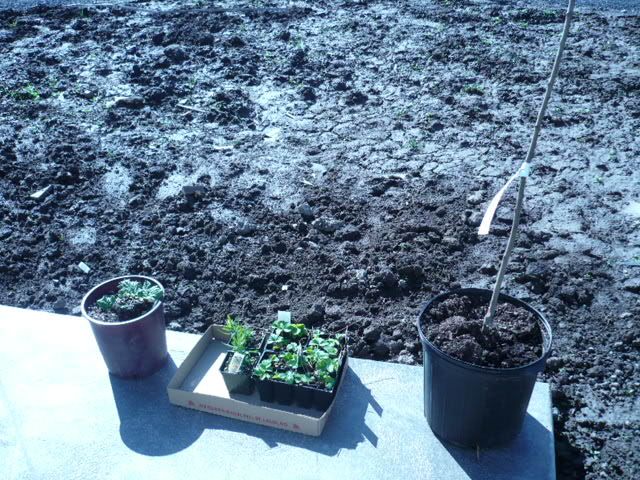
We found a spare half hour to stop at a nursery and buy a few things: Alpine strawberries, tarragon, rhubarb, and an Italian Prune plum tree. Not pictured: rosemary (it can't sit outside yet, so it's hanging out in a windowsill). We have several more fruit trees on the way: two cherries (Hartland and Montmorency), two apples (Honey Crisp and Yellow Transparent), and a Green Gage plum. We still have pears to buy, and maybe a Haralson apple.
The weather has been fantastic the last few days, getting into the 70s and sunny, sunny, sunny. The winter wheat is coming up in fields all around us; it looks like a green haze on the ground. Spring is here!
We found a spare half hour to stop at a nursery and buy a few things: Alpine strawberries, tarragon, rhubarb, and an Italian Prune plum tree. Not pictured: rosemary (it can't sit outside yet, so it's hanging out in a windowsill). We have several more fruit trees on the way: two cherries (Hartland and Montmorency), two apples (Honey Crisp and Yellow Transparent), and a Green Gage plum. We still have pears to buy, and maybe a Haralson apple.
The weather has been fantastic the last few days, getting into the 70s and sunny, sunny, sunny. The winter wheat is coming up in fields all around us; it looks like a green haze on the ground. Spring is here!
Saturday, April 10, 2010

Thursday, April 8, 2010
Windy Day
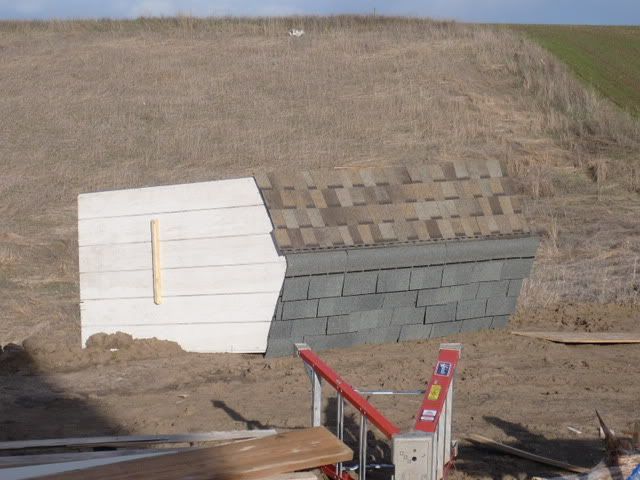
So, we had sustained winds of 30-40 MPH with gusts up to 60 MPH (or so I hear from the internet; I haven't convinced A to spend $300 on a weather station yet but I'm working on it). Our partially finished chicken coop did not remain in its upright position. Thankfully, no chickens were harmed in our little recreation of Twister -- they're still in the living room. And in fact, the chicken coop seems to have maintained its structural integrity. We're just going to move it to its final resting place tomorrow, re-attach it to its floor, and then hopefully get the windows and doors in ASAP. At which point it will be finished, more or less -- at least move-in ready. We'll probably paint it at some point, but the house isn't even painted yet so I don't know how the chicken coop rates. Hopefully the additional weight and being more bottom heavy will prevent another tip-over.
We'll still need to fence the chicken yard, but that shouldn't take too long. More likely than not our chickens will end up as a hawk/coyote/fox buffet, but hopefully if nothing else we'll learn some things about fencing and coop building/security for next year.
Wednesday, April 7, 2010
It Hasn't Got *Much* Poop In It: Chickens, Part Two
See, this is where not having a clue what we're doing really starts to hamper our efforts: we cannot keep chicken poop out of the waterer, they climb all over (and occasionally tip) their feeder, and any morning now I'm going to get out of bed and the Rubbermaid will be empty because they've all escaped.

The water is the biggest issue. I'm tempted to blame it on the chickens, who are very dumb and who are, after all, the ones actually flinging their litter into it and befouling it (pun unintentional). But blaming creatures whose brains can't be any larger than a pencil eraser isn't getting the crap out of the waterer.
The problem is that we need to get the edge raised up to about "shoulder" high, either by hanging or by propping it up. I've been trying to think of some way to hang it for 15 days with no luck, and I've propped it on half a dozen things, which are either too high (dehydrated chickens), too rickety (flooded chickens) or too low (poop in the water). The thing I have it propped on right now is a pretty good height, but they actually stand on the left edge and dip their butts into the water. I'm not sure if this is because they are rock stupid, or because they are taunting me. Either way, it's not working. Our next plan is those cheap red garden bricks. Wish us luck.
The feeder seems to be okay for the moment (yes, that is an empty Diaper Genie refill it's sitting on; the tuna can was too tippy). Of course, they're going to get taller and start climbing all over it again. But at this point I'm sort of thinking they're only going to be in there for another week and a half or so. Let them have their fun. They don't seem to poop in the food, anyway.
And our final issue: the chance of escape. I tried to rig up a cover for the container out of chicken wire yesterday, but that stuff is impossible to work with. Now I'm thinking an old window screen would work pretty well, but of course I haven't got one. Hopefully I have a few more days to work on it before we have to fish chickens out from under the kitchen sink.

Chicken Portrait: Marlo, Prop Joe, Avon and Stringer. Marlo in particular is really fledging out a lot.
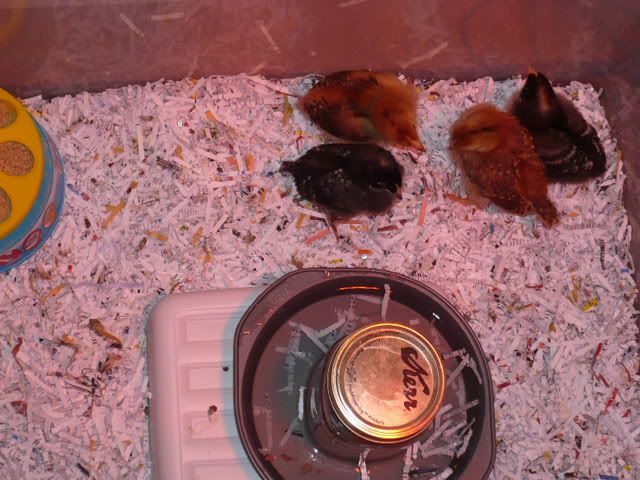
The water is the biggest issue. I'm tempted to blame it on the chickens, who are very dumb and who are, after all, the ones actually flinging their litter into it and befouling it (pun unintentional). But blaming creatures whose brains can't be any larger than a pencil eraser isn't getting the crap out of the waterer.
The problem is that we need to get the edge raised up to about "shoulder" high, either by hanging or by propping it up. I've been trying to think of some way to hang it for 15 days with no luck, and I've propped it on half a dozen things, which are either too high (dehydrated chickens), too rickety (flooded chickens) or too low (poop in the water). The thing I have it propped on right now is a pretty good height, but they actually stand on the left edge and dip their butts into the water. I'm not sure if this is because they are rock stupid, or because they are taunting me. Either way, it's not working. Our next plan is those cheap red garden bricks. Wish us luck.
The feeder seems to be okay for the moment (yes, that is an empty Diaper Genie refill it's sitting on; the tuna can was too tippy). Of course, they're going to get taller and start climbing all over it again. But at this point I'm sort of thinking they're only going to be in there for another week and a half or so. Let them have their fun. They don't seem to poop in the food, anyway.
And our final issue: the chance of escape. I tried to rig up a cover for the container out of chicken wire yesterday, but that stuff is impossible to work with. Now I'm thinking an old window screen would work pretty well, but of course I haven't got one. Hopefully I have a few more days to work on it before we have to fish chickens out from under the kitchen sink.
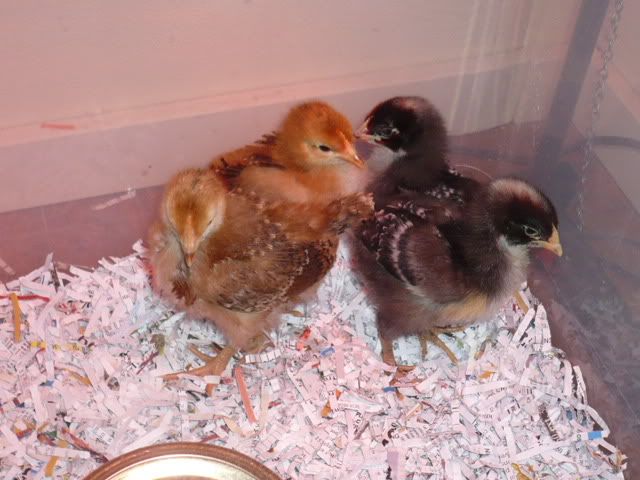
Chicken Portrait: Marlo, Prop Joe, Avon and Stringer. Marlo in particular is really fledging out a lot.
Tuesday, April 6, 2010
Come with me, my love... to the sea, the Sea of Mud
Looking at yesterday's photo, you may have wondered what the odd, wave-like formation in the foreground was. Well, without the gentle and forgiving blanket of snow, it's this:

Basically, a sea of mud and construction debris. Remember our 25 feet of topsoil? Well, this is what happens when you pull the grass off 25 feet of topsoil, throw garbage on it, and let it sit all winter.
I could make a lot of excuses (we moved into our house in mid-November, about a day before it started raining/snowing in earnest; I was eight months pregnant; a few weeks later we had a newborn; we are honestly sort of lazy), but the upshot is that our idyllic rural getaway is surrounded by an impassable trash moat that won't really be dry enough to walk on until June.
Which sort of encapsulates our main problem: what do you do with seven acres? Luckily for us, about half of it is woodlot, but that still leaves us with more than 3 acres to do... something with. At most this year we're going to put half an acre into "production" with vegetables, and another maybe quarter-acre devoted to fruit trees and berries. I have a romantic vision of about half an acre in front (where most of the mud and garbage is) as a sort of cottage garden, with a lovely small lawn for the baby to play on. But honestly, that's going to take years. Right now I'd settle for just not being the neighborhood eyesore.
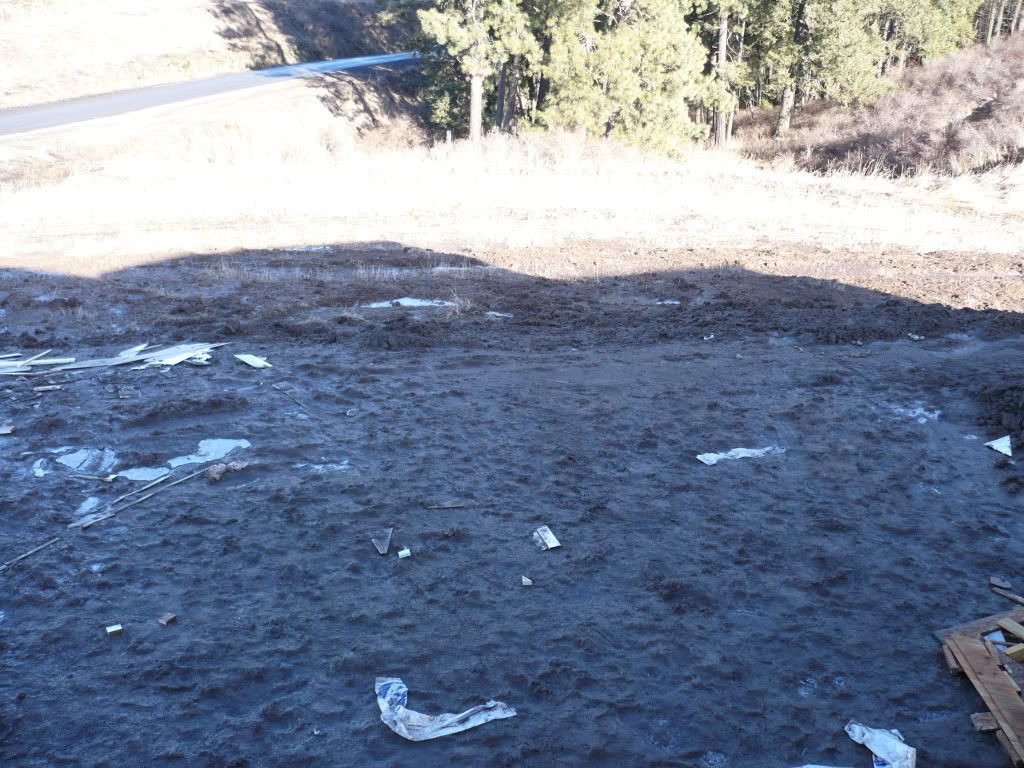
Basically, a sea of mud and construction debris. Remember our 25 feet of topsoil? Well, this is what happens when you pull the grass off 25 feet of topsoil, throw garbage on it, and let it sit all winter.
I could make a lot of excuses (we moved into our house in mid-November, about a day before it started raining/snowing in earnest; I was eight months pregnant; a few weeks later we had a newborn; we are honestly sort of lazy), but the upshot is that our idyllic rural getaway is surrounded by an impassable trash moat that won't really be dry enough to walk on until June.
Which sort of encapsulates our main problem: what do you do with seven acres? Luckily for us, about half of it is woodlot, but that still leaves us with more than 3 acres to do... something with. At most this year we're going to put half an acre into "production" with vegetables, and another maybe quarter-acre devoted to fruit trees and berries. I have a romantic vision of about half an acre in front (where most of the mud and garbage is) as a sort of cottage garden, with a lovely small lawn for the baby to play on. But honestly, that's going to take years. Right now I'd settle for just not being the neighborhood eyesore.
Subscribe to:
Posts (Atom)